Domestic demand slumps while exports surge—China's auto market faces structural transformation in the first half of the year
The China Passenger Car Association (CPCA) and the China Association of Automobile Manufacturers (CAAM) recently released June and first-half production and sales data for passenger vehicles. Although the two sets of statistics differ slightly in methodology, the overall industry picture is striking: domestic retail sales have sharply declined, with fuel-powered vehicles nearly halved; meanwhile, overseas vehicle exports have surged explosively, making it almost certain that annual export volume will surpass 10 million units. While overseas markets are propping up the sector amid weak domestic demand, internal divisions within the new-energy segment are also emerging—pure electric vehicles continue to grow strongly, while plug-in hybrid models have lost their growth momentum, accelerating the exit of transitional solutions from the market.
Two data releases on August 8th and 9th vividly illustrate the chill gripping the domestic market. According to CAAM’s figures, retail sales of passenger vehicles in June reached 1.497 million units, a year-on-year drop of 26.4%. Fuel-powered vehicles sold only 490,000 units—a near 50% decline compared to the same period last year, with a 49.9% year-on-year decrease. Extending this trend to the first half of the year, total passenger vehicle sales amounted to 8.288 million units, down 24.3% year-on-year, while fuel-powered vehicles totaled 3.694 million units, a 31.9% year-on-year contraction.
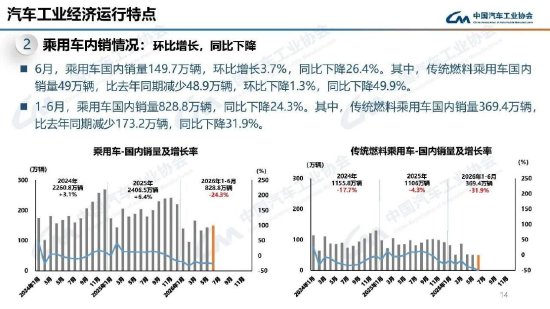
Such a steep year-on-year decline has not occurred in nearly four years. The bulk of the downturn pressure has been shouldered by fuel-powered vehicles. A telling detail is that wholesale declines among automakers were less pronounced, indicating large volumes of unsold inventory remain stuck in dealer channels. Joint-venture brands relying heavily on fuel-powered vehicles have become the most direct victims of this inventory burden.
Fuel-powered vehicles’ continued plunge: high oil prices are merely a superficial excuse
In early 2024, industry consensus suggested that full-year passenger vehicle sales in China could face a deep 20% decline. The first-half data appears to confirm this forecast, but mainstream market explanations contain two significant flaws.
First, the recovery pace of new-energy vehicles has far exceeded expectations. Overall new-energy vehicle sales dropped 13.4% year-on-year in the first half, but in June alone, sales fell just 0.4% year-on-year and showed continuous improvement month-on-month from May—the only segment capable of stabilizing the broader market. Previously, many analysts were pessimistic, assuming that the withdrawal of government subsidies combined with last year’s premature consumption would keep new-energy vehicles mired in a prolonged slump. However, June’s performance clearly shows that demand gaps created by policy-driven overconsumption are rapidly closing, and the sector may return to positive growth in the third quarter, meaning the market need not fear a catastrophic collapse for the full year.
Second, blaming the entire decline in fuel-powered vehicle sales solely on high oil prices no longer holds water. The timeline aligns clearly: as tensions between the U.S. and Iran escalated, international crude oil prices broke through $100 per barrel in March and held firm at elevated levels, coinciding with a sharp drop in fuel-powered vehicle sales. Luxury fuel-powered brands saw particularly strong declines in April and May, confirming that rising oil prices acted as a short-term catalyst. But since June, both international crude and domestic refined oil prices have fallen steadily, dropping below $70 per barrel in July, yet there has been no sign of recovery in fuel-powered vehicle retail sales. Thus, oil price alone cannot fully explain the current situation.
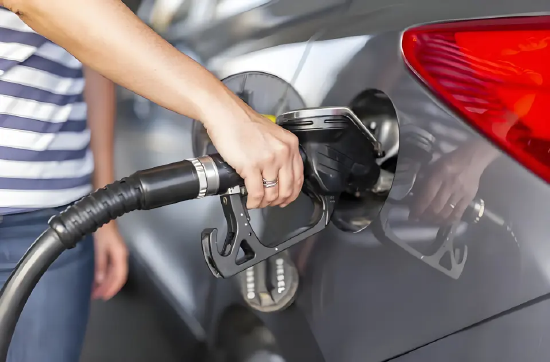
At a deeper level, rising oil prices appear more like the final straw breaking the camel’s back for fuel-powered vehicle demand. Many consumers planning vehicle replacements had already been long-term observers of new-energy options; oil price fluctuations simply accelerated their decision-making. Even if oil prices return to low levels, users who have already reset their consumption preferences are unlikely to switch back to fuel-powered vehicles. This structural shift in demand, though lacking quantitative survey evidence so far, is already evident from feedback at dealerships.
As a result, we see multinational automakers collectively entering a broad-scale strategic adjustment phase this year: either drastically cutting global electric vehicle investments or simultaneously laying off workers and shutting down overseas factories, causing ongoing turbulence in global operations. Management teams are now focused entirely on organizational restructuring, postponing new vehicle development and model launches, and shifting product update responsibilities largely to Chinese joint ventures. In the first half of the year, the industry launched over 600 new models, annual updates, and derivative vehicles in one go. Yet, only a handful of flagship products with strong differentiation and sales-driving potential emerged. With demand continuously declining and supply failing to deliver fresh momentum, the internal combustion engine (ICE) segment has essentially lost its chance for recovery.
Pure electric ascends; extended-range benefits peak
The new energy sector as a whole weathered market pressures, but within the industry, the era of universal growth has long passed. The growth trajectories of pure electric, plug-in hybrid, and extended-range vehicles have diverged sharply.
According to data from the China Association of Automobile Manufacturers (CAAM), pure electric vehicle sales rose 13% year-on-year in the first half, while plug-in hybrids and extended-range vehicles collectively declined by 2.5%. The contrast was even starker in the June breakdown from the China Passenger Car Association (CPCA): wholesale sales of pure electric vehicles reached 981,000 units, up 26.9% year-on-year; plug-in hybrids sold 406,000 units, an increase of 18.1%; extended-range vehicles, however, dropped to just 94,000 units, a sharp decline of 25.2%. In the top 10 best-selling new energy models list for the first half, only the AITO M9 remained as an extended-range model—every other spot was firmly occupied by pure electric vehicles.
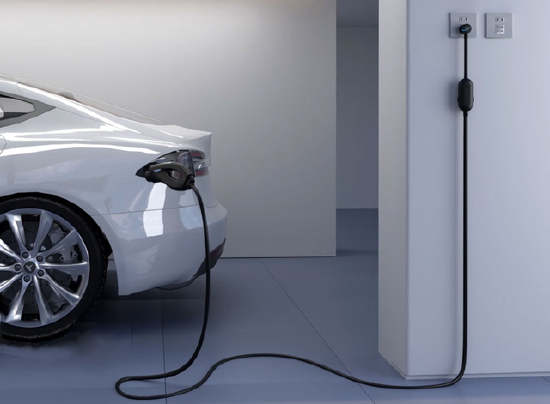
Many attribute the drop in extended-range sales simply to fuel prices, but real-world usage patterns don't support this conclusion: most extended-range owners use pure electric mode for daily commuting, so fuel price fluctuations have limited impact on purchase decisions. The biggest current weakness of extended-range vehicles is their inherent short-range limitation, which continues to be magnified. Even though new large extended-range SUVs now offer battery capacities of 70–80 kWh, they haven’t managed to reverse the downward trend in this segment.
The core selling point that once drove rapid adoption of extended-range vehicles—eliminated range anxiety—is being rapidly eroded by advancements in pure electric technology. Long-range EVs are now widely available, megawatt-level fast charging stations are rolling out, and nationwide battery swap networks are expanding, making high-speed charging experiences nearly equivalent to refueling gasoline cars. In contrast, extended-range vehicles carry an extra internal combustion engine system, leading to higher maintenance costs and greater mechanical risks—eroding what were once their key differentiators.
It’s undeniable that in remote areas with poor charging infrastructure, extended-range vehicles still offer irreplaceable practical value and will maintain a stable base in the short term. However, the growth window for this segment has completely closed, and its long-term outlook remains bleak. Once solid-state batteries achieve commercialization, all vehicles equipped with fuel tanks—including ICE and extended-range models—will face renewed survival pressure. Fuel prices merely accelerate this process.
Explosive surge in exports: China's unique industrial foundation
While the domestic market feels cold, overseas vehicle exports have seen an unprecedented boom, becoming the sole confirmed growth driver for the automotive industry this year.
Data from CAAM shows that total vehicle exports reached 5.096 million units in the first half, including 4.432 million passenger vehicles—an increase of 65.3% year-on-year. In June alone, exports hit 1.037 million units, with passenger vehicles at 905,000 units—a year-on-year jump of 75.1%. The growth curve remains steep, and surpassing 10 million units for the full year seems inevitable.
The landscape of Chinese automakers going global has become clearly polarized: Chery topped the export rankings in the first half, with exports accounting for 70% of its total sales, becoming the first truly outward-oriented automaker in China. Geely led the industry in export growth, achieving a 150% year-on-year increase. Compared to historical benchmarks, Japan’s peak auto export volume stood at 6.85 million units in 1985. By 2026, China’s vehicle export volume will directly set a new global record.
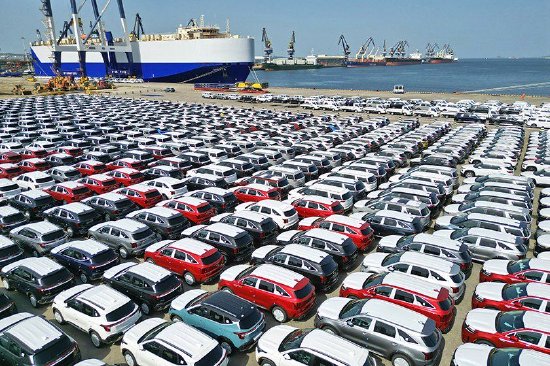
Since stabilizing at the one-million-unit level in 2020, Chinese automakers’ overseas expansion has steadily grown, and this year has witnessed a quantum leap. Current monthly export volumes are nearly equal to the entire year’s output seven years ago—the overseas landscape has changed dramatically.
For years, the industry has held a one-sided narrative: China’s new energy vehicles rely entirely on government subsidies, and Tesla remains the global leader in electric vehicle technology. Yet the reality of the industry is precisely the opposite: Tesla, which long struggled with cash flow crises in its early years, only escaped its operational困境 by entering China and leveraging the country’s complete local supply chain for mass production.
The global competitiveness of Chinese automakers has never stemmed from isolated technological advantages, but rather from a full industrial ecosystem spanning upstream mining, batteries, vehicle manufacturing, and intelligent integration—delivering systemic strengths in supply chain efficiency and product definition. Tariff barriers can only temporarily isolate competition; they cannot erase fundamental differences in manufacturing costs and efficiency.
The EU's anti-subsidy investigation into China's new energy sector is not fundamentally about tracing subsidies, but about forcing Chinese companies to hand over entire production processes for battery cathodes, separators, and cells—an attempt to fill gaps in Europe’s own incomplete industrial chain. However, the bankruptcy of Northvolt, Europe’s homegrown battery manufacturer, shattered the illusion of "independent battery production" in the West. Despite continuous heavy financial injections from European automakers and comprehensive support from Chinese firms—including equipment, technology, and production line management—the local battery companies still struggle to achieve stable mass production.
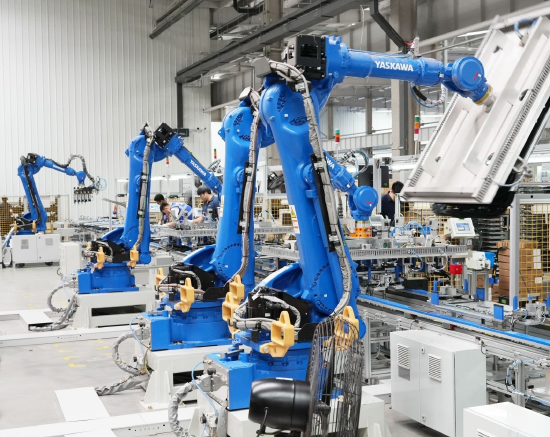
After on-site visits to China’s domestic battery supply chain, numerous U.S. and European venture capital firms have directly placed power batteries and energy storage into their “non-investment list.” Chinese companies have established absolute capacity advantages across the entire upstream chain—from graphite and rare metals to metallurgy—and this robust industrial foundation cannot be quickly replicated through mere technology transfer agreements.
Trade protection measures such as double anti-dumping duties and minimum price restrictions adopted by the U.S. and Europe merely use non-market tools to temporarily narrow our cost advantage. They can delay overseas expansion but cannot reverse the long-term shift in competitive dynamics. In third-party overseas markets without local automotive protection, manufacturing efficiency and product practicality remain the decisive factors.
In Volkswagen’s conventional view, Latin America and Africa—regions with weak power infrastructure—are deserts for EV sales, where internal combustion vehicles are essential. But market reality tells a different story. Most developing countries suffer from unstable grid power. A vehicle equipped with dozens of kilowatt-hours of battery capacity can serve directly as a household backup power source, powering shop lighting and small-scale production equipment at a much lower total cost than residential energy storage systems or diesel generators. Chinese EVs come standard with external discharge functionality, transforming transportation tools into “mobile power stations” that precisely address the rigid electricity demand in underdeveloped regions.
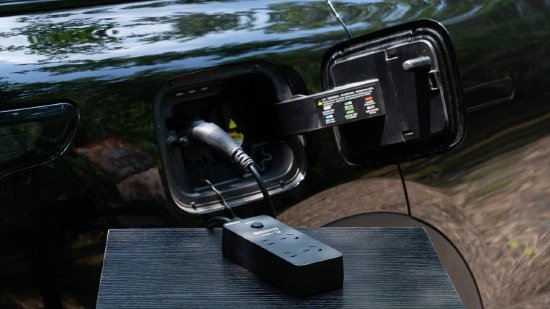
The export growth rates by segment clearly signal long-term trends: fuel-powered vehicle exports rose 35.5% year-on-year in the first half, while new energy vehicle exports surged by 120%. Although total fuel vehicle exports still exceed those of electric vehicles, it is only a matter of time before EV exports surpass fuel vehicles—this inflection point is near.
Market outlook for the second half: the trend toward electrification is irreversible.
The domestic market essentially serves as a “pilot testing ground” for global automotive electrification. The depth of new energy vehicles replacing internal combustion engines has already far exceeded what is seen in overseas markets.
Fuel-powered vehicles’ domestic market share has already fallen below 30%, and industry consensus suggests the long-term floor may drop further to around 20%. Only in extreme conditions such as sub-zero climates or heavy off-road use do fuel vehicles retain irreplaceable advantages. Once solid-state batteries achieve commercialization, the space for fuel vehicles will shrink even further.
In the second half of the year, fuel vehicle sales will see slight recovery, but the rebound potential is limited. For joint ventures and traditional automakers whose core product lines remain fuel vehicles, short-term business goals are no longer about regaining lost market share, but about stabilizing existing operations. Persistent demand fluctuations significantly increase production line and supply chain management costs, making stable sales volumes the sole basis for production planning and cost control.
Domestic and international markets form a perfect hedge: rapidly growing overseas exports can largely offset the sales shortfall caused by shrinking domestic demand. Combined with continued recovery in China’s domestic new energy market, the overall passenger vehicle market in 2026 is likely to experience only a modest decline, avoiding the sharp downturn indicated by first-half data.
Several years ago, market adoption of new energy vehicles was driven primarily by policy incentives. Today, consumer demand is shifting spontaneously, fundamentally altering the market landscape. The era dominated by internal combustion engine vehicles in China's automotive market has come to an end. The structural transformation toward electrification is irreversible; the only question left is how fast this transition will occur. Driven by dual domestic and international cycles, this dynamic will become a lasting norm for China's automotive industry.